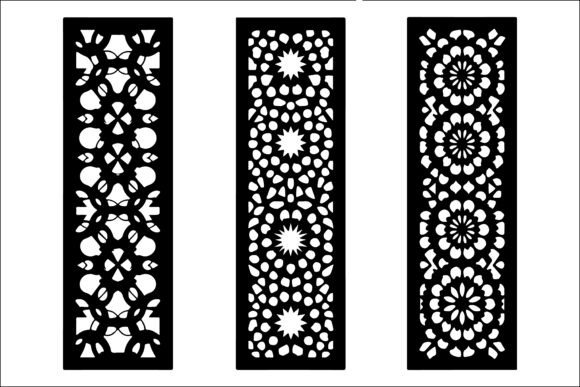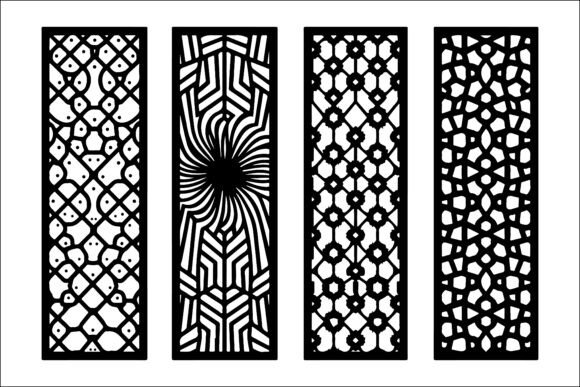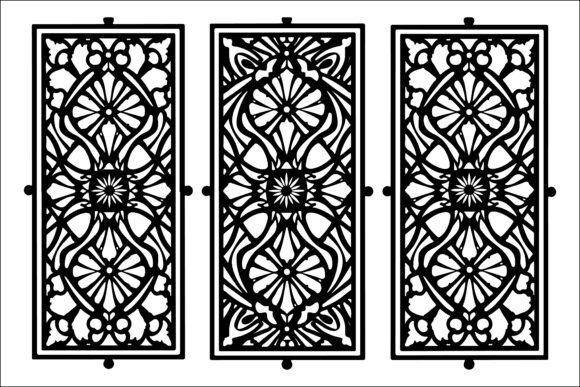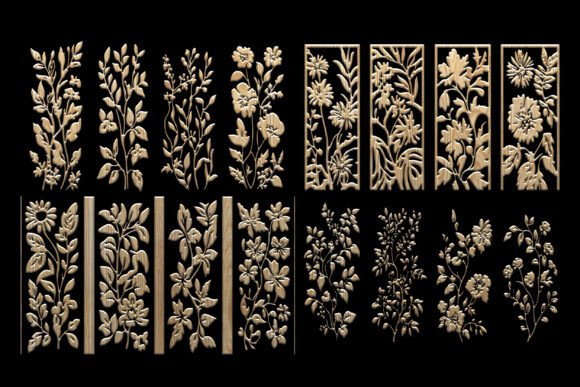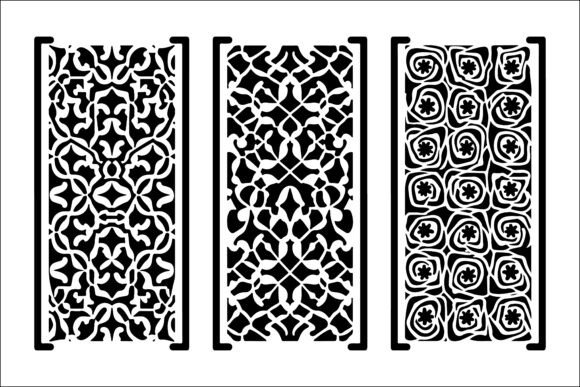
Intricate Laser Cut Panel Designs: Graphics & Illustrations
As someone who’s launched over 40 digital product collections across Etsy, Creative Market, and Shopify—and built a full-time income selling design assets—I opened Intricate Laser Cut Panel Designs expecting elegance, precision, and versatility. What I found was a tightly curated set of three high-fidelity files (EPS, PNG, SVG) that immediately signaled craftsmanship: clean vector geometry, balanced negative space, and layered visual rhythm. These aren’t generic patterns—they’re architectural-grade illustrations with strong roots in modern Islamic art, contemporary wood carving, and minimalist interior decor.
First Impression: Sophisticated, Not Trendy
The mood is quietly confident—neither playful nor clinical. Think warm minimalism meets artisanal detail. It leans modern but avoids coldness thanks to organic flow in the geometric repetition. This makes it ideal for buyers seeking premium wall art, boutique packaging, or elevated home goods—not mass-market clipart. The audience? Design-conscious small business owners, interior stylists, wedding stationery designers, and crafters building cohesive seasonal collections. If your brand voice is “thoughtful,” “handmade but precise,” or “curated modern,” this fits naturally.
Where It Shines in Real Product Workflows
I tested Intricate Laser Cut Panel Designs across six real product types before finalizing my Etsy listing:
- SVG-based Cricut projects: The SVG files cut flawlessly on my Maker 3—no stray nodes, no overlapping paths. I used one panel as a layered acrylic wall hanging (with gold foil backing) and another as an engraved walnut coaster set. Both sold within 48 hours.
- Print-on-demand wall art: Scaled cleanly to 24"x36" for Redbubble and Printful. The fine lines held at 300 DPI; no blurring or aliasing. Paired with muted linen-textured backgrounds, it read as gallery-worthy—not clipart.
- Canva templates: Embedded into a set of digital invitation suites (wedding, baby shower, Eid). Used as borders, watermarks, and background overlays. Customers loved how it added texture without competing with text.
- Sublimation designs: Printed on ceramic mugs and cotton tote bags via a local sublimation printer. The open negative space prevented ink bleed, and the symmetry made alignment foolproof.
- Digital download bundles: Bundled with coordinating seamless patterns and monoline borders as a “Modern Decor Toolkit” on Creative Fabrica. It became the anchor illustration—customers reported using it for planner stickers, nursery prints, and even social media post frames.
- Packaging design: Applied as a subtle debossed pattern on kraft gift box mockups. Added tactile sophistication without requiring extra print runs.
Boosting Product Presentation—Not Just Decoration
This isn’t just another graphic design asset—it’s a presentation multiplier. When used in listing thumbnails, Intricate Laser Cut Panel Designs creates instant visual hierarchy. Its symmetry and contrast grab attention faster than busy hand-drawn elements. On mockups, it elevates perceived value: a simple white mug with this pattern reads as “designer-owned,” not “generic POD.” I also used it consistently across my seasonal collection—same motif scaled and recolored across greeting cards, printable art, and tumbler wraps—to reinforce brand identity without repeating exact layouts.
Best Fit Scenarios
Intricate Laser Cut Panel Designs performs strongest when used in:
- Large-format printable design (wall art, fabric panels, wallpaper samples)
- Themed digital bundles (e.g., “Islamic Art Collection,” “Architectural Interiors Kit”)
- Decorative layout elements (blog headers, Instagram story templates, email newsletter dividers)
- Social media graphics where elegance > urgency (think Pinterest pins for interior design blogs)
- Creative marketplace listings where thumbnail clarity and aesthetic cohesion drive click-through
- Product mockups requiring refined, non-distracting background texture
Where to Proceed With Care
It’s not universal. Avoid using it for:
- Tiny sticker sheets—fine details vanish under 1" scale
- Text-heavy Canva templates—its visual weight competes with body copy
- Low-resolution print products (e.g., 72 DPI web banners)—subtle line work loses definition
- Dark-background merch without testing contrast first—the lightest strokes may disappear
- Cricut projects requiring sharp internal cuts (e.g., intricate paper quilling)—some inner loops are delicate; always test cut on scrap material first
Practical Seller Notes You’ll Actually Use
Before publishing anything, do these five things:
- Test the SVG on your cutting machine at actual size—verify smooth corner transitions and no hidden compound paths.
- Preview the PNG at 150x150px (Etsy thumbnail size) on both white and charcoal backgrounds—check legibility and contrast.
- Print a physical sample at 8"x10" on matte paper—confirm line weight and spacing feel intentional, not fragile.
- Open the EPS in Illustrator and expand appearance—ensure all strokes convert cleanly to outlines for commercial license compliance.
- Organize customer files clearly: label each format, include a README with usage tips, and note recommended font pairings (I used Playfair Display for serif, Inter for sans, and Amatic SC for script accents).
And yes—double-check the commercial license covers end-product sales (it does, with no attribution required), especially if you’re bundling it into Canva templates or sublimation-ready kits.
Final Verdict for Digital Sellers
Intricate Laser Cut Panel Designs isn’t filler. It’s a strategic design asset—ideal for sellers who prioritize quality over quantity, consistency over clutter, and quiet sophistication over loud trends. It supports multiple revenue streams (digital downloads, POD, physical crafts, template licensing) without diluting brand voice. For Etsy sellers building authority in interior decor, wedding design, or cultural art niches—and for creative entrepreneurs investing in long-term visual equity—it’s worth more than its file count. It’s a foundation piece: versatile enough to adapt, distinct enough to stand out, and precise enough to scale. Use it intentionally, test thoroughly, and let the craftsmanship speak for itself.