Key Silhouette Vector Illustration Art
A Designer’s First Look: Clean, Quiet, and Full of Meaning
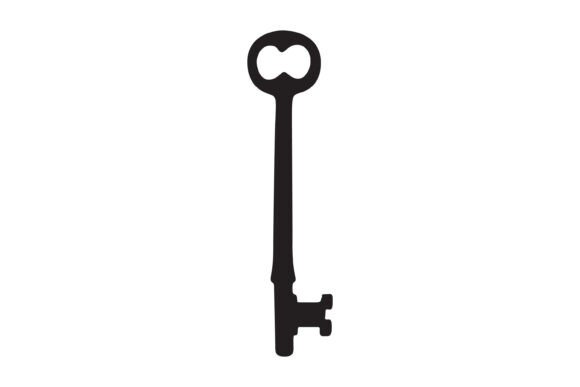
When I opened Key Silhouette Vector Illustration Art, my first thought wasn’t “Oh, a key”—it was “This says something before a single stitch is laid down.” That’s rare. Most vector illustrations lean on detail or novelty, but this one leans on presence. It’s a classic key outline—no teeth exaggerated, no ornate bow, no shadow or gradient—just confident, balanced negative space and clean curves. It feels like a whisper of access, security, memory, or even legacy. Not flashy, not trendy. That makes it unusually versatile for embroidery projects where subtlety builds trust—not noise.
Where It Lives Best: Real Projects, Real Customers
Last week, I used Key Silhouette Vector Illustration Art to develop a small-batch embroidered tote bag line for a local boutique specializing in handmade home goods. The bags were natural canvas, unbleached and slightly textured. We stitched the key centered on the front panel—about 3.5 inches tall—with matte black thread. The result? Instant cohesion. Customers didn’t just see “a key”—they saw intention. One buyer told me she bought it for her daughter’s college move-in: “It felt like a quiet promise—‘you hold the keys now.’” That emotional resonance is what turns a simple machine embroidery design into a meaningful personalized gift.
It works equally well on baby onesies (as a minimalist baby embroidery motif near the chest), on tea towels (stitched in soft ecru thread for kitchen warmth), or as an embroidered patch sewn onto denim jackets. Because the shape is open and uncluttered, it reads clearly even at 2 inches tall—ideal for caps or aprons where fabric curves or movement might distort busier designs.
What Holds Up—and What Needs Extra Care
Key Silhouette Vector Illustration Art shines on stable, medium-weight fabrics: cotton twill, linen blends, midweight sweatshirt fleece, and structured canvas. Its strength lies in its simplicity—no fine interior lines, no tiny flourishes that vanish under fill stitch density or get lost in stabilizer bulk. That said, it’s not bulletproof everywhere:
- Stretchy fabric? Proceed with caution. A curved surface like a baseball cap crown can pull the key’s bow or shaft out of proportion unless digitized with stretch compensation—or stitched with light cutaway stabilizer and reduced tension.
- Dark or heavily textured fabric? Test thread contrast thoroughly. A charcoal key on navy terry cloth can disappear unless you use a high-contrast thread (ivory, cream, or metallic silver) and confirm stitch coverage in your digital embroidery file.
- Tiny hoop sizes (under 4 inches)? The design scales well—but avoid shrinking it below 1.75 inches without checking corner sharpness and curve smoothness in your embroidery software preview. Some vectors lose fidelity when aggressively downscaled.
- Frequent washing? Since it’s outline-based, it holds up better than dense satin-stitched motifs—but still requires secure backing and quality thread. Recommend it for finished product durability on items like pillow covers or kitchen towels, not delicate silk scarves.
Why It Elevates Your Craft Business—Without Saying a Word
As an Etsy seller and small shop product developer, I’ve learned customers don’t buy stitches—they buy feeling, clarity, and care. Key Silhouette Vector Illustration Art supports all three. Its visual calm makes handmade products look intentional, not improvised. On a custom-embroidered apron for a baker, it reads as craft-focused—not kitschy. On a holiday gift set (tea towel + linen napkin), it ties the collection together without needing matching fonts or colors.
It also strengthens brand consistency. If your shop centers around themes like growth, transition, or personal milestones, this key becomes a quiet signature—like a visual footnote you can return to across seasons. And because it’s scalable and neutral, it avoids dating your craft business aesthetic. No retro filters, no neon gradients—just honest shape and symbolic weight.
Practical Notes Every Embroidery Designer Should Check
Before stitching Key Silhouette Vector Illustration Art into your next embroidery project, do these five things:
- Test on scrap fabric—especially if using textured, dark, or stretchy material. Watch how the curves lay down and whether corners pucker.
- Check thread color contrast in both natural and artificial light. A thread that looks crisp indoors may mute on a sunlit tote bag.
- Review stitch density in your embroidery software. Even simple outlines can over-stitch if auto-digitized poorly—look for unnecessary jump stitches or overlapping runs.
- Confirm hoop size compatibility. While the vector is flexible, your actual embroidery file may be pre-digitized for specific hoops. Don’t assume.
- Verify licensing before selling finished items or bundling it into digital product previews. As a Graphics asset in the Illustrations category, its commercial use terms matter—especially for printable mockups or resale as part of a design pack.
Final Thought: Simplicity With Substance
Key Silhouette Vector Illustration Art won’t shout from a crowded craft fair table—and that’s exactly why it works. In a market flooded with busy patterns and over-designed motifs, this key offers quiet authority. It doesn’t need embellishment to feel complete. Used thoughtfully—with attention to fabric, thread, and context—it becomes more than decoration. It becomes a detail people pause at, remember, and choose again. For custom apparel, holiday embroidery, personalized gifts, or any commercial embroidery project where meaning matters as much as method, it’s a reliable, resonant choice—one I’ll reach for again.